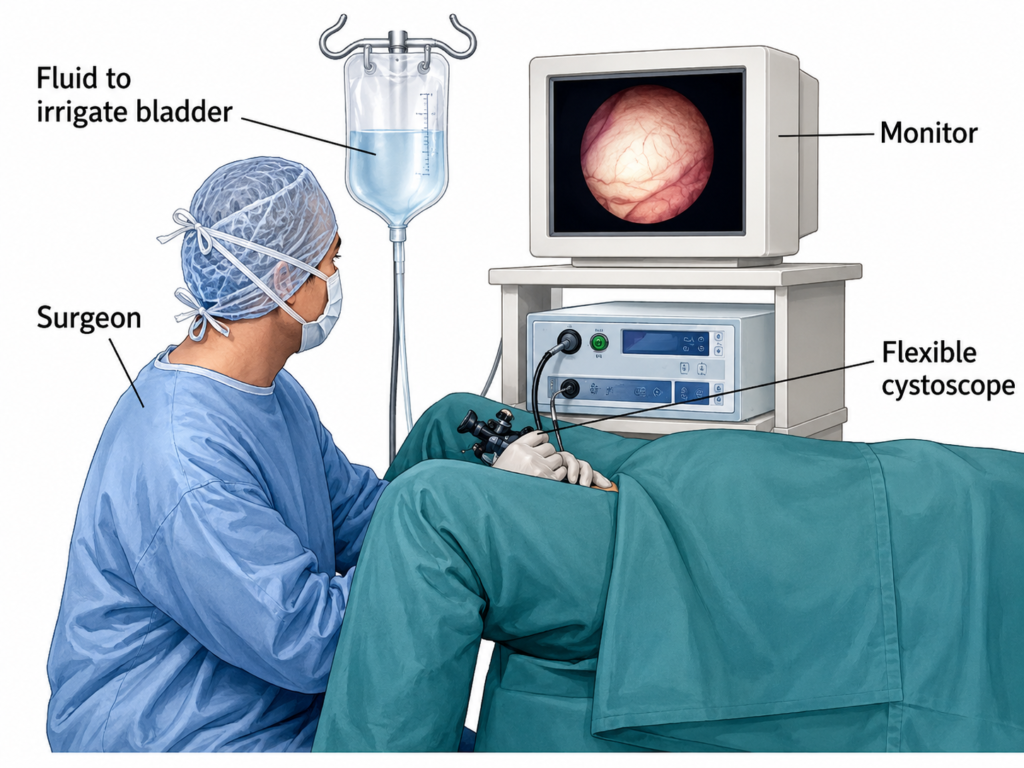
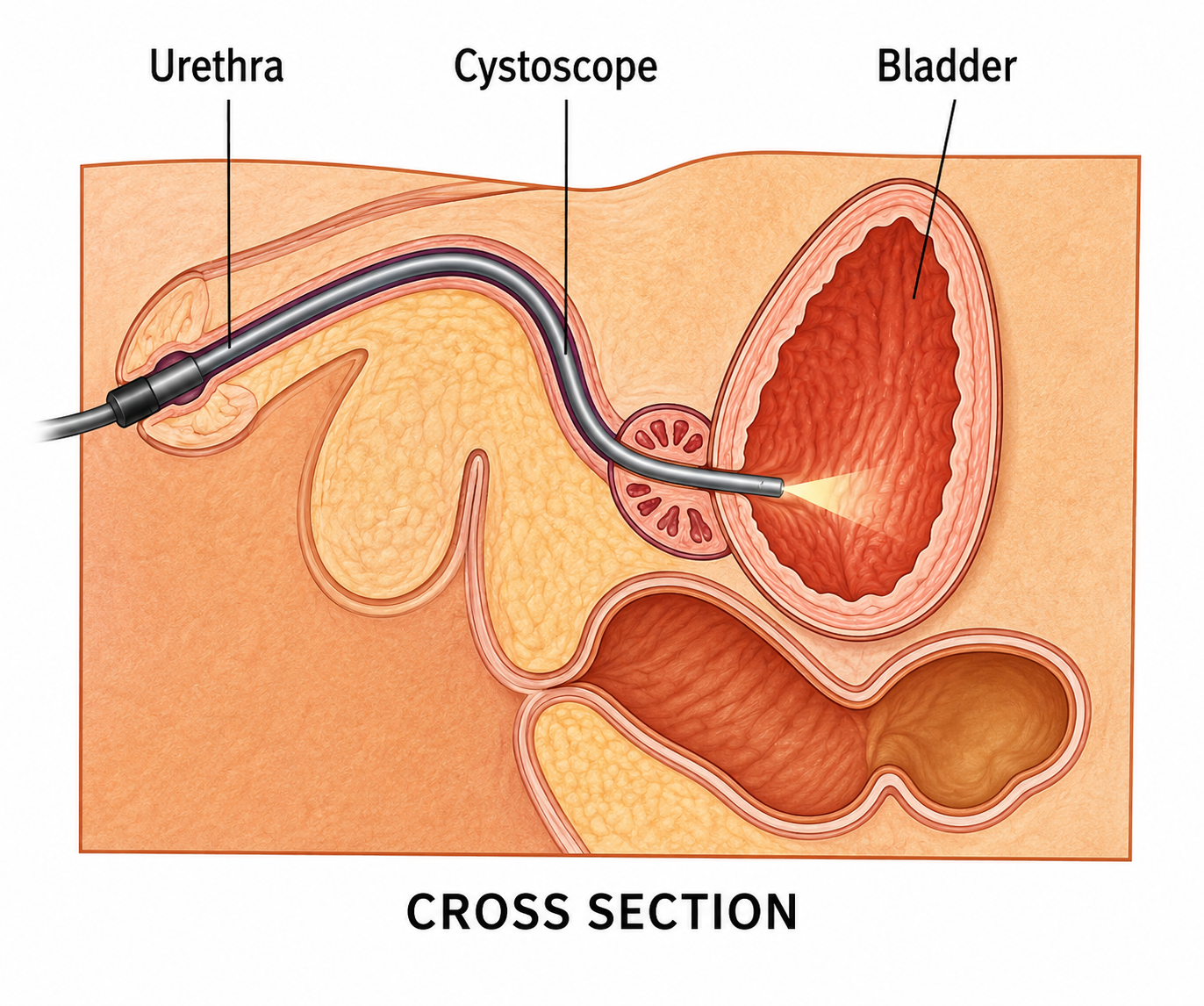
During cystoscopy, a thin, hollow viewing tube called a cystoscope is inserted through the urethra into the bladder to examine tumours and other abnormalities affecting the bladder and urethra.
The cystoscope may be rigid or flexible, and special instruments can be passed through it to remove stones, destroy tumours, or collect tissue samples. The procedure may be performed under local or general anaesthesia.
During the procedure
An illuminated and magnified view of the bladder lining is transmitted from the cystoscope to a monitor for detailed examination.
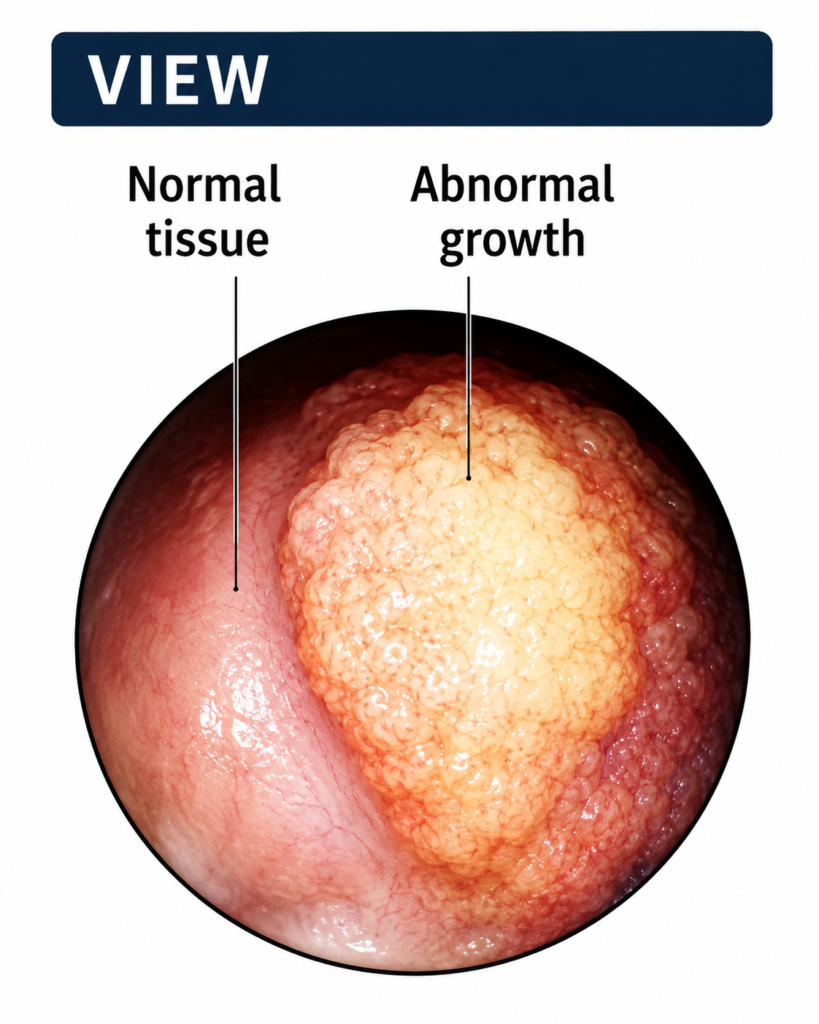
Bladder lining
This magnified view through a cystoscope shows an abnormal growth in the bladder lining. Tissue samples taken from such growths are examined under a microscope to check for cancerous cells.
Circumcision
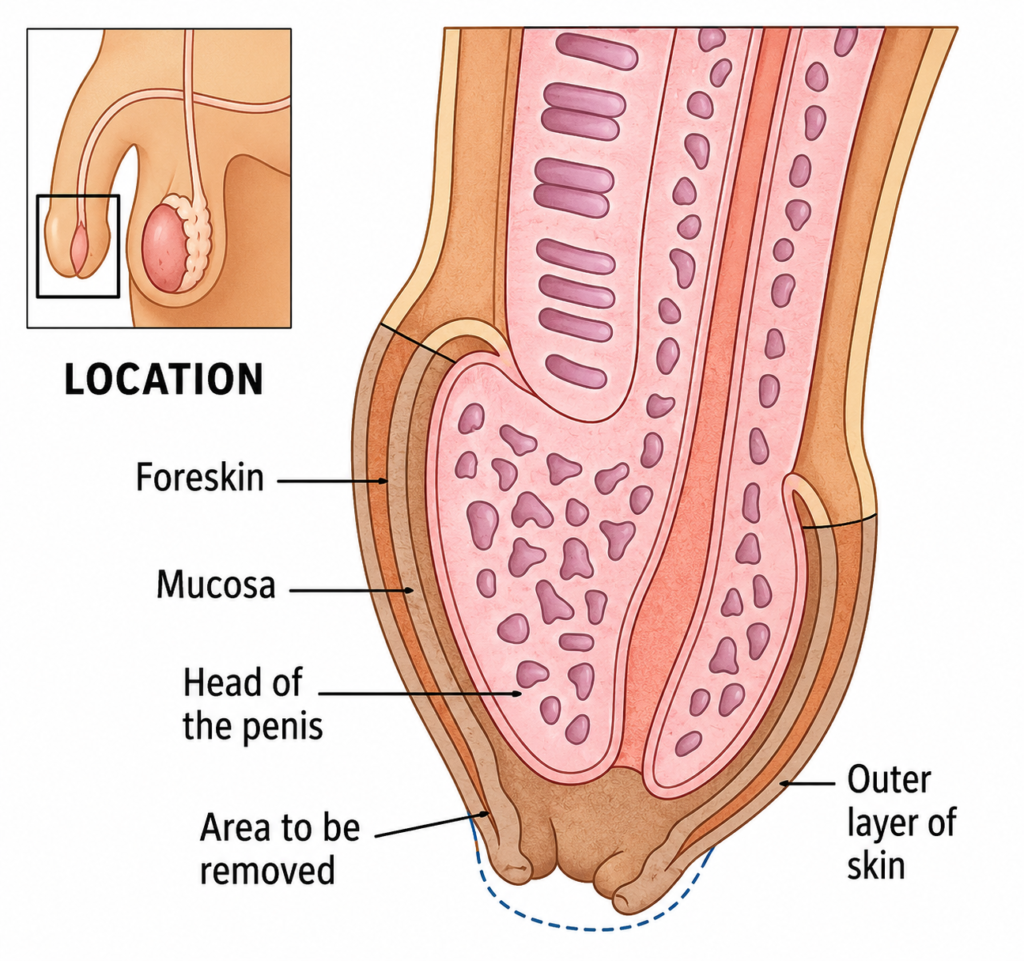
Circumcision is the surgical removal of the foreskin, the skin covering the head of the penis (the glans). This procedure is sometimes carried out in infancy for religious reasons. In the past, circumcision was often performed routinely in childhood in the belief that it would improve hygiene, but this practice is no longer recommended. In older boys and men, circumcision may be necessary if the foreskin becomes Too tight to be pulled back fully see Phimosis, p.461). When the operation Is carried out in infancy, only local anaesthesia is required, but boys and men are usually given a general anaesthetic before undergoing surgery.
The operation
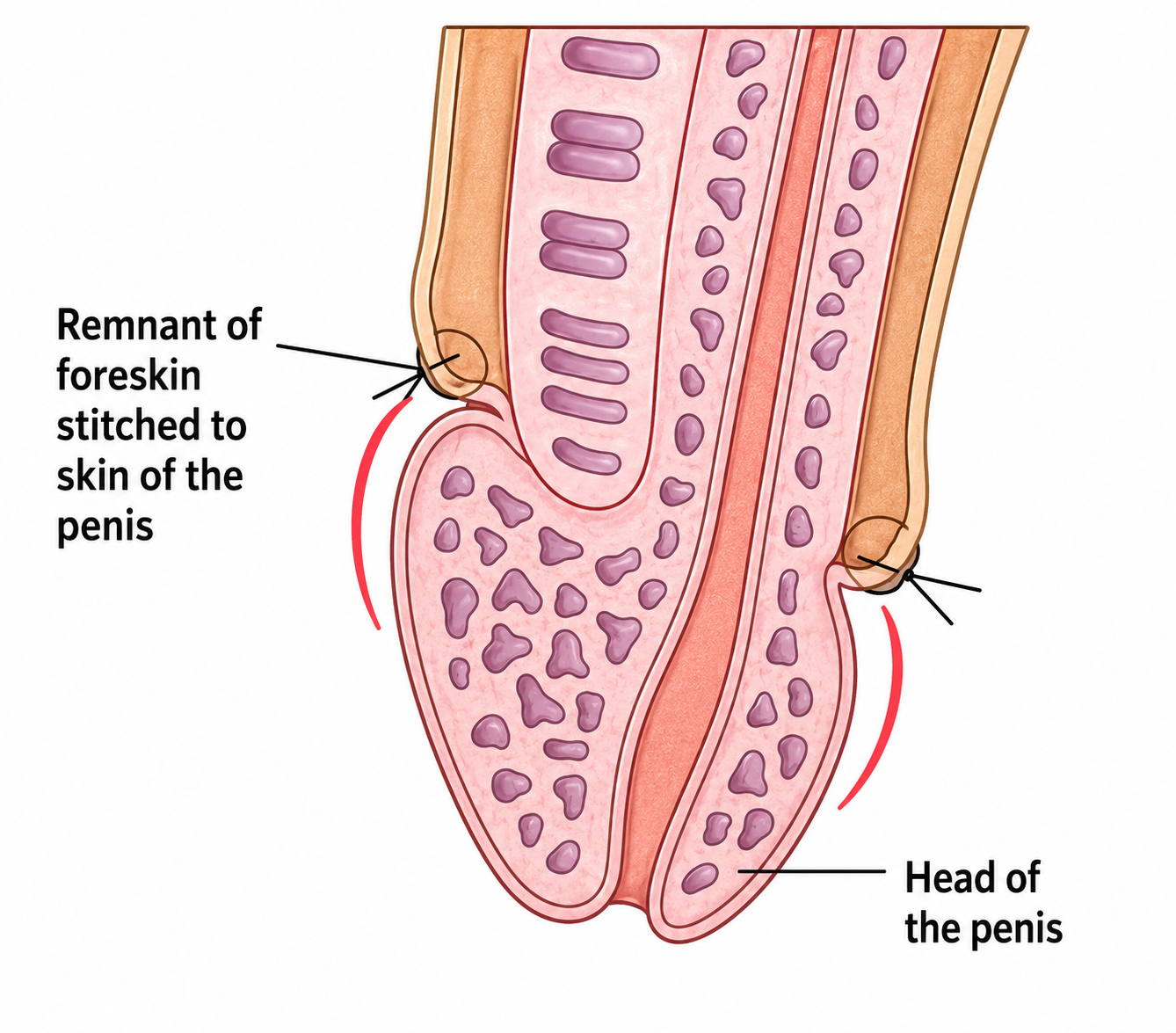
The foreskin, which covers the head of the penis, consists of an inner layer of mucosa and an outer layer of skin. During the operation, both layers are removed.
After the operation
The remnant of the foreskin has been stitched to the skin just behind the head of the penis, leaving the head of the penis uncovered. These stitches either dissolve or fall out after a few days.
Prostate enlargement
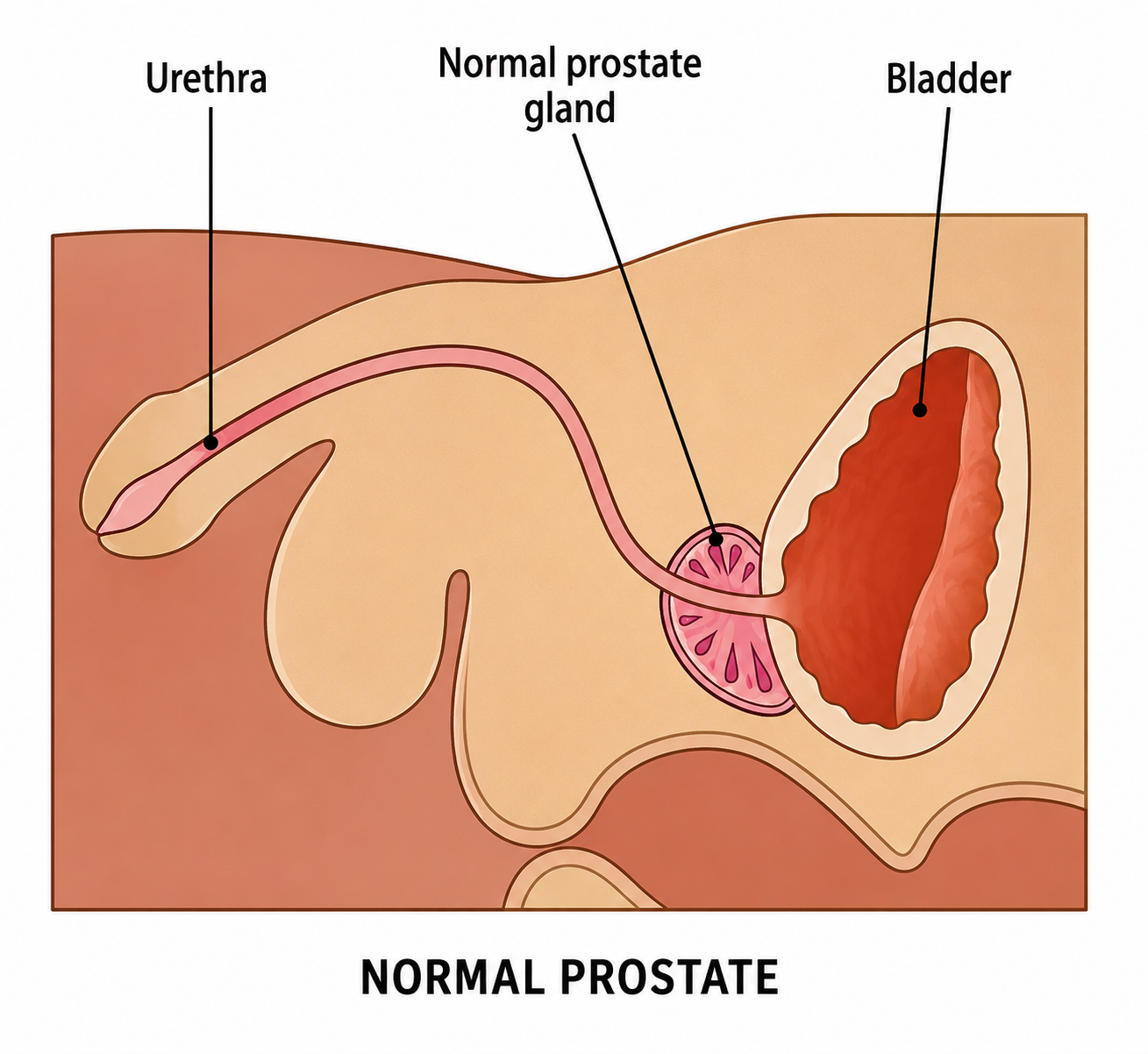
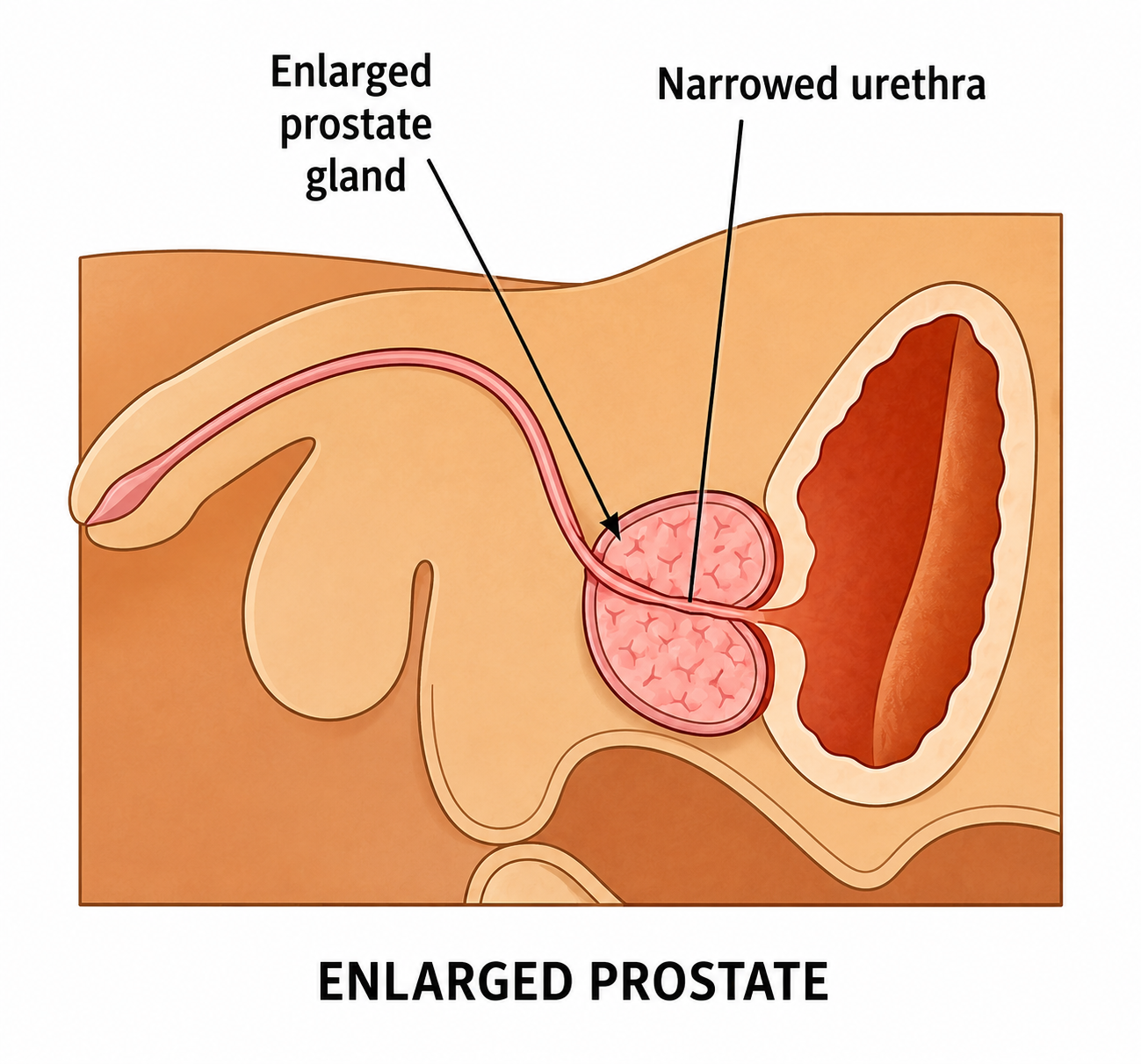
The prostate encircles the upper part of the urethra. An enlarged prostate may constrict the urethra, making it difficult to pass urine, and indent the base of the bladder, preventing it from emptying completely.
Hydrocele
A hydrocele is a condition in which fluid accumulates in the double-layered membrane surrounding the testis, leading to swelling in the scrotum. This swelling is usually painless and may occur on one or both sides of the scrotum. Hydrocele is commonly seen in newborn babies due to incomplete closure of the membrane around the testis, but it can also develop in adults because of injury, infection, inflammation, or blockage within the scrotal region. In most cases, the swelling appears soft and smooth, and the size may gradually increase over time. Although hydrocele is generally harmless, large hydroceles can cause discomfort, heaviness, or difficulty in movement and may require medical treatment if symptoms become severe.